Specifications
| Metal | Silver |
| Purity | .999 Fine |
| Weight | 10 Troy Ounces |
| Form Factor | Bar |
| Serial | Individual Serial Number |
Design & Liquidity
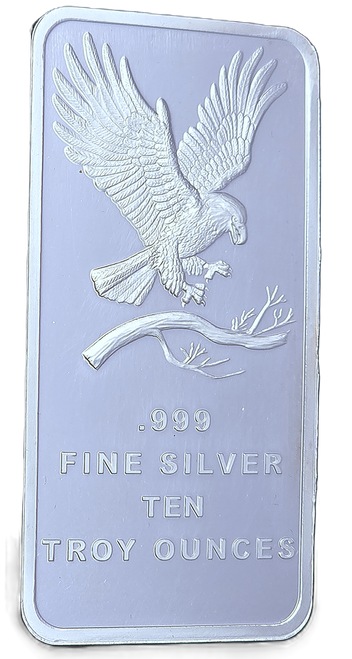
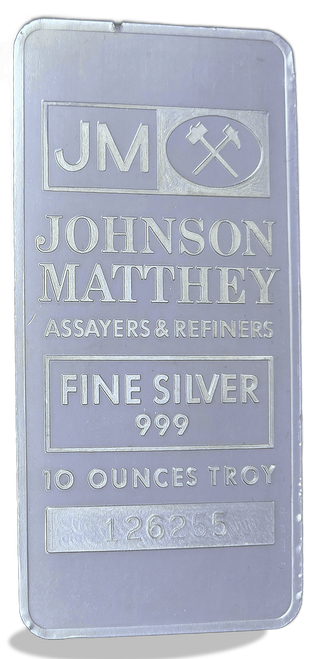
Johnson Matthey 10 oz silver bars typically feature a pressed design on the obverse, showcasing the iconic Johnson Matthey logo—a stylized JM, sometimes accompanied by a hammer and pickaxe—along with the weight, purity, and a unique serial number. The reverse side can vary, with some bars displaying the Johnson Matthey logo in a repeating diagonal pattern, while others may be left blank. These specific designs were produced by Johnson Matthey, with certain "logo back" variations likely originating in the 1980s. As Johnson Matthey ceased its bullion production in 2015, these bars are now considered vintage.
In terms of secondary market liquidity, Johnson Matthey silver bars are highly sought after due to their global recognition and the mint's sterling reputation for quality. They are widely accepted and easily traded by dealers and investors worldwide. The discontinuation of their bullion production has significantly enhanced their collectible value, often leading to premiums over standard bullion products due to their limited availability and historical prestige. Furthermore, these bars meet the requirements for inclusion in Precious Metals IRAs.
About the Mint
Johnson Matthey boasts a rich history spanning over two centuries, founded in 1817 by Percival Norton Johnson as a gold assayer in London, England. The company's name changed to Johnson & Matthey in 1851 with the addition of George Matthey as a partner. This long-standing heritage has cemented its reputation as a trusted name in precious metals.
While Johnson Matthey has evolved into a global leader in specialty chemicals and sustainable technologies, its most recognized products in the bullion market were its highly regarded gold, silver, platinum, and palladium bars and rounds. Their 10 oz and 100 oz silver bars, in particular, remain popular among collectors and investors.
An interesting historical fact highlighting Johnson Matthey's authoritative standing is its appointment as the official assayer and refiner to the Bank of England in 1852. Furthermore, in 1874, the company was commissioned to manufacture the kilogram reference standard—made from 90% platinum and 10% iridium—and its international copies for the Bureau International des Poids et Mesures, alongside the International Prototype Metre. This remarkable achievement underscores their precision and scientific expertise in metallurgy.